Jaw Surgery Recovery Timeline: What to Expect While Healing
Posted 6/9/2026 in Oral Surgery

Jaw surgery recovery takes time, and the healing process can look different for each patient. In the first few weeks, most people experience swelling, soreness, numbness, changes in appetite, and limitations in normal activities.
Understanding what to expect during recovery can help you prepare for each stage of healing, from the first days after surgery to returning to work, eating more normally, and continuing long-term healing.
How Long Does It Take to Recover from Jaw Surgery?
Jaw surgery recovery happens in stages, with the most noticeable changes occurring in the first few weeks. While healing times vary, depending on the procedure and the patient, most people follow a similar general timeline.
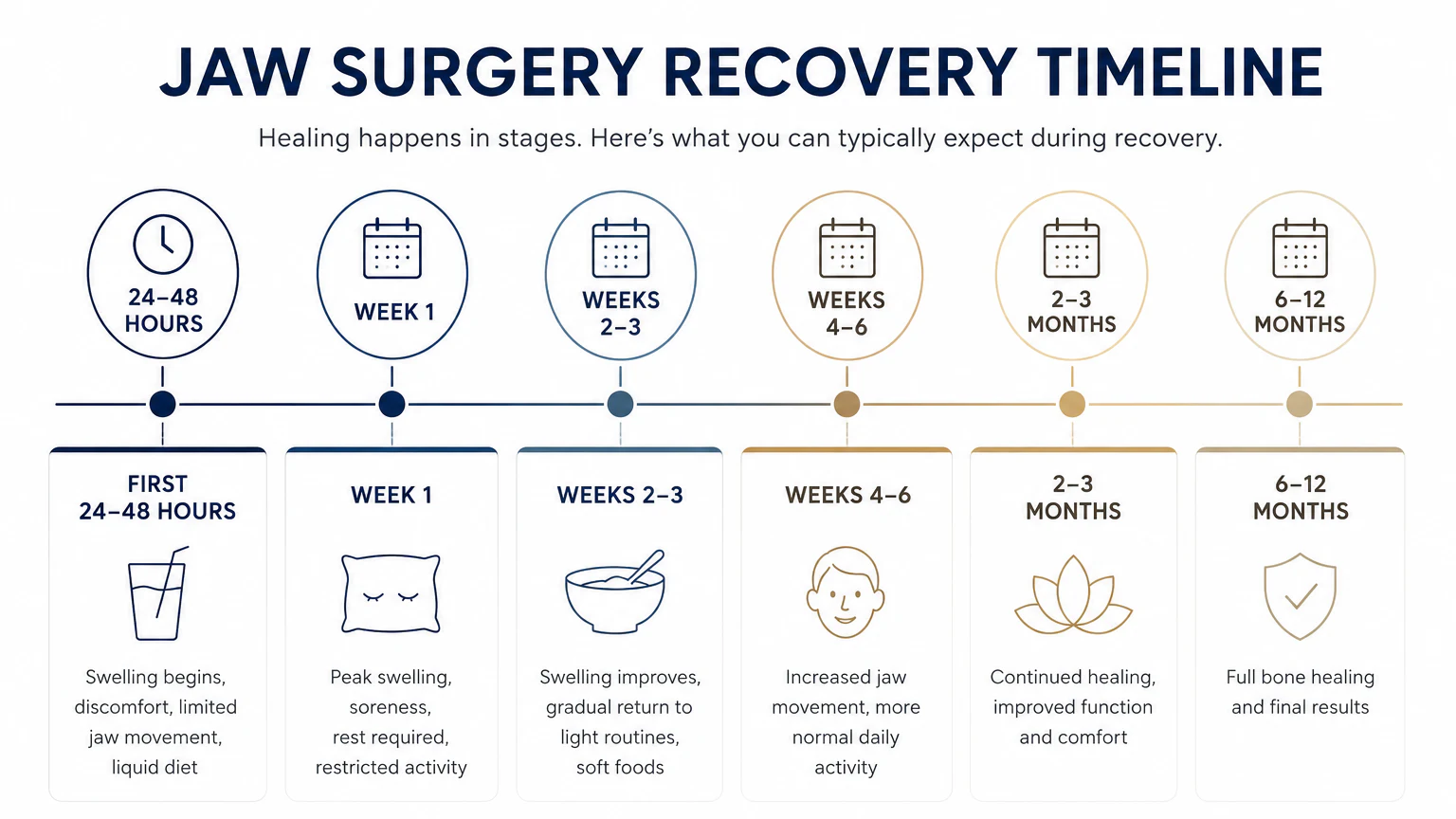
First 24–48 Hours After Surgery
The first couple of days focus on rest and initial healing. Swelling typically begins during this time, and discomfort is most noticeable as anesthesia wears off. Patients are usually limited to liquids and need to avoid strenuous activity.
Week 1
Swelling often peaks around the second or third day, before gradually improving. Bruising and jaw tightness are common, and speaking or opening the mouth may feel limited. Rest is important during this stage, and most patients remain on a liquid or very soft diet.
Weeks 2-3
During this phase, swelling and discomfort begin to decrease more noticeably. Many patients begin returning to light daily routines, though activity should still be limited. Soft foods are gradually introduced as tolerated.
Weeks 4-6
Jaw function continues to improve, and patients can typically resume more normal daily activities. Diet options may expand, depending on your healing and the surgeon’s guidance.
2-3 Months and Beyond
Most visible recovery has occurred, but internal healing continues. Jaw strength, function, and comfort continue to improve over time. Full bone healing and final results can take several months to stabilize fully.
In general, patients begin to feel more comfortable within the first few weeks, but complete healing from jaw surgery can take several months. Your exact recovery time depends on the type of surgery, your overall health, and your surgeon’s post-operative instructions.
Swelling and Pain After Jaw Surgery
Swelling and discomfort are a normal part of jaw surgery recovery, especially during the first few days. While the timeline of healing varies, most patients notice swelling is most noticeable early on and gradually improves as the body heals.
Swelling often affects the cheeks, jawline, and surrounding areas, and it can temporarily change facial appearance. This is expected and typically improves with time and proper aftercare. Applying cold compresses during the first couple of days and following your surgeon’s instructions can help manage swelling more effectively.
Pain levels vary between patients, but discomfort is typically most noticeable during the early stages of recovery and becomes more manageable over time. Your surgical team will recommend medications to help control pain and keep you comfortable as you heal.
Numbness and Sensation Changes After Jaw Surgery
It’s common to experience temporary numbness or altered sensation in the lips, chin, cheeks, or gums after jaw surgery. This happens because the nerves in the jaw area can be irritated or affected by swelling during the healing process.
For most patients, this numbness is temporary and gradually improves over time as the nerves recover. Sensation may return slowly over several weeks or months, and in some cases, tingling or “pins and needles” sensations can occur as feeling comes back.
Nerve recovery varies from patient to patient. Many people notice gradual improvement within the first few weeks, while full return of sensation can take several months. Your surgeon will monitor your healing and let you know what to expect based on your specific procedure.
What to Eat After Jaw Surgery
Eating after jaw surgery requires a gradual approach as your jaw heals. In the early stages of recovery, your diet will be limited to liquids and very soft foods, with more options introduced over time based on your surgeon’s recommendations. Because sensation may be reduced, it can take time to adjust to eating and drinking after surgery.
Patients may not fully feel pressure or temperature in certain areas of the mouth, making it especially important to eat slowly, choose appropriate food textures, and use caution with food and drink temperatures.
Choosing the right foods helps protect the surgical area, support healing, and ensure you’re getting proper nutrition during recovery.
Diet Progression After Jaw Surgery
| Stage | What to Eat |
|---|---|
| First few days | Liquids such as smoothies, broths, protein shakes, and juices |
| Week 1 | Pureed or blended foods like soups, yogurt, mashed potatoes |
| Weeks 2-3 | Soft foods such as scrambled eggs, pasta, soft fish |
| Weeks 4-6 | Gradual return to more solid foods as tolerated |
Tips for Eating During Recovery
- Stay hydrated: Drink plenty of fluids throughout the day
- Focus on nutrition: Choose foods rich in protein and vitamins to support healing
- Avoid hard or crunchy foods: These can irritate the surgical site or disrupt healing
- Eat slowly and carefully: Take small bites and avoid putting pressure on the jaw
- Avoid overly hot foods or liquids: Reduced sensation may make it harder to detect temperature and can lead to burns
- Follow your surgeon’s guidance: Your diet progression may vary based on your procedure
These changes are temporary, but being mindful during meals can help prevent discomfort and support a smoother recovery.
When Can You Eat Normally Again?
Most patients begin reintroducing more normal foods within several weeks, but returning fully to a regular diet can take longer depending on their healing progress. Your surgeon will let you know when it’s safe to resume tougher or more complex foods.
Returning to Work and Daily Activities After Jaw Surgery
Most patients need time away from work, school, and normal routines after jaw surgery. The exact amount of time depends on the type of surgery, the physical demands of your daily activities, and how your body responds during the first stages of healing.
For many patients, 1 to 3 weeks away from work or school may be recommended. Patients with desk-based work may be able to return sooner, while those with physically demanding jobs may need additional time before resuming full responsibilities.
During recovery, avoiding strenuous activity, heavy lifting, and exercise is vital until your surgeon clears you. Increased physical activity too soon can worsen swelling, increase discomfort, or delay healing.
Speaking may also feel limited at first due to swelling, stiffness, or changes to how you bite. Most patients gradually become more comfortable talking as swelling improves and jaw movement returns.
Your oral surgeon will provide personalized guidance on when it is safe to resume work, school, exercise, and other daily activities based on your procedure and healing progress.
Talking After Jaw Surgery
It’s normal for speaking to feel difficult immediately after jaw surgery. Swelling, numbness, stiffness, and changes in your bite can make it harder to pronounce words clearly during the early stages of recovery.
Most patients notice gradual improvement in speech as swelling decreases and jaw movement returns. In the meantime, it can help to:
- Speak slowly and clearly
- Limit long conversations in the first few days
- Stay hydrated to reduce dryness and discomfort
Talking becomes noticeably easier within the first couple of weeks, though full comfort may take longer depending on the procedure.
When to Contact Your Surgeon
Most symptoms after jaw surgery are a normal part of the healing process, especially during the first few days and weeks. However, it’s important to know when something may need medical attention.
You should contact your surgical team if you experience:
- Pain that worsens or does not improve over time
- Swelling that increases after the first few days instead of gradually improving
- Numbness that worsens over time
- Fever or signs of infection, such as unusual drainage or a persistent bad taste
- Difficulty breathing or swallowing
- Bleeding that does not slow or stop as expected
If something doesn’t feel right, it’s always best to reach out. Your surgeon can help determine whether what you’re experiencing is part of normal healing or an issue that needs attention.
Schedule a Jaw Surgery Consultation
If you’ve been advised to consider jaw surgery or are exploring your treatment options, understanding the recovery process is an important part of making an informed decision.
At Carolinas Center for Oral & Facial Surgery, our team provides personalized treatment planning and detailed guidance before, during, and after surgery to help you feel confident at every stage of care.
Schedule a consultation at one of our convenient locations across the Carolinas, including Charlotte, Columbia, Greenville, and Raleigh, to learn more about your treatment options and what to expect from jaw surgery recovery.




Related Blogs

Oral Surgery

Oral Surgery
13 Things I Wish I Knew Before Having Double Jaw Surgery
January 6, 2025

Oral Surgery
An Oral Surgeon's Overview of Corrective Jaw Surgery
December 11, 2024

Oral Surgery
Orthognathic Jaw Surgery: What It Is & How to Know If You May Need It
December 11, 2024