
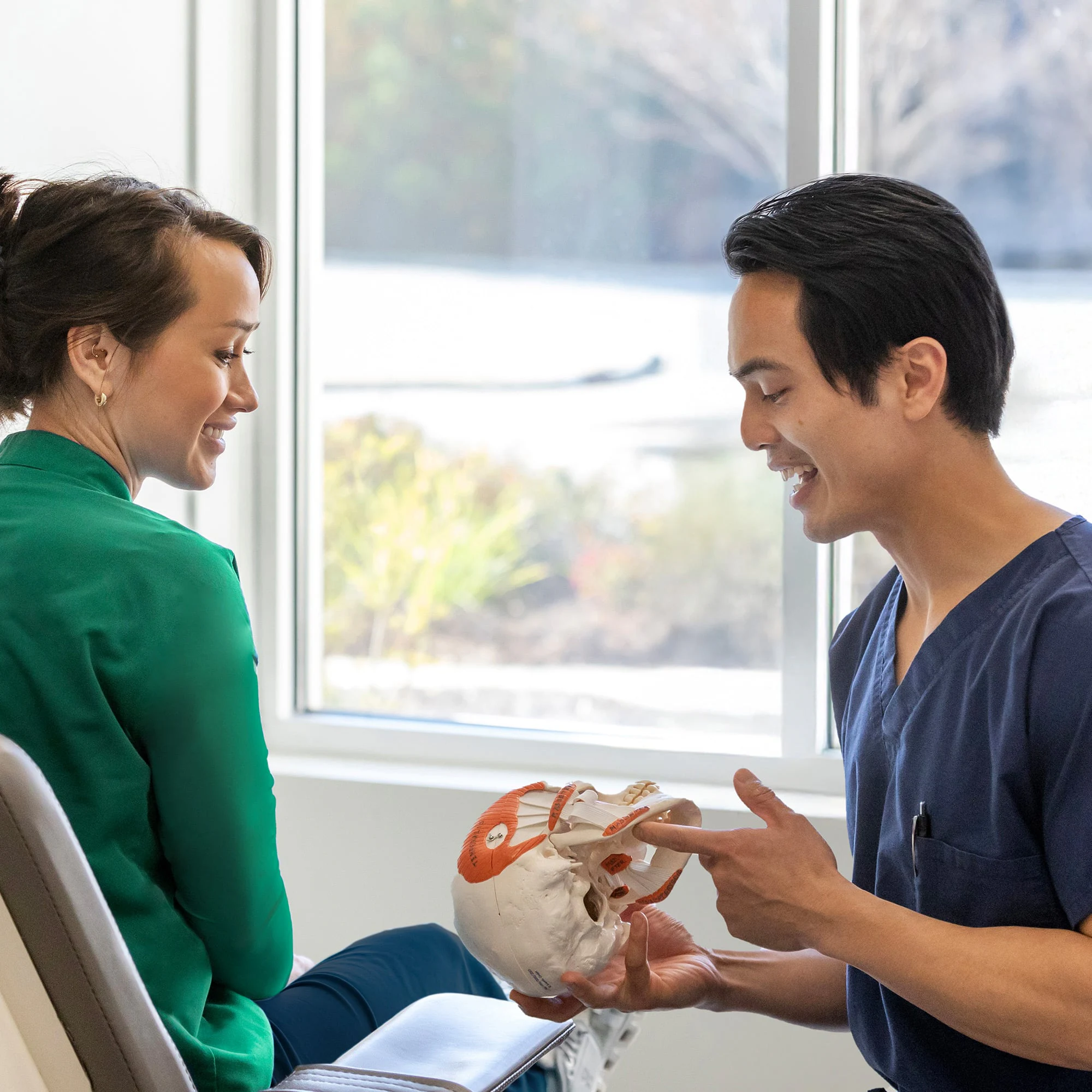
 Headaches are incredibly common, but they aren’t always caused by migraines, sinus issues, or stress alone. For many patients, recurring headaches are actually connected to the jaw joint and the muscles that support it.
TMJ disorders (also called TMD) can create pain and tension that radiates into the temples, forehead, and even behind the eyes. Because these headaches often mimic other conditions, TMJ-related headaches are frequently overlooked or misdiagnosed.
If you’ve been dealing with persistent headaches, along with jaw discomfort, clicking, or facial tension, identifying the underlying cause is the first step toward lasting relief.
Can TMJ Cause Headaches?
Yes, TMJ disorders can absolutely cause headaches, and it happens more often than many people realize.
The jaw joint and the muscles that control jaw movement are closely connected to the temples, face, neck, and the nerves that transmit pain signals throughout the head. When the TMJ is strained or inflamed, discomfort doesn’t always stay limited to the jaw; it can radiate upward and feel like a chronic tension headache or even trigger migraine-like symptoms.
TMJ-related headaches often develop through a combination of factors, including:
Muscle Tension and Overuse
Many TMJ headaches begin when the jaw muscles become overworked from clenching, grinding, or prolonged tension. Tight jaw muscles can create referred pain in the temples and sides of the head, leading to frequent or daily headaches.
Nerve Irritation Near the Jaw Joint
The temporomandibular joint sits near major facial nerves, including the trigeminal nerve. When the joint is irritated or compressed, it may contribute to headache symptoms that feel sharp, intense, or migraine-like.
Referred Pain From the Jaw
Pain signals in the jaw and facial region can sometimes be “misread” by the nervous system, causing discomfort to be felt in the head rather than at the source. This is one reason TMJ disorders are often mistaken for primary headache conditions.
TMJ headaches can mimic other types of headaches. A proper evaluation is important to determine whether the jaw joint, bite alignment, or surrounding muscles may be contributing to your symptoms.

What Does a TMJ Headache Feel Like?
A TMJ headache is often felt as deep, aching pressure around the temples or sides of the head, sometimes paired with facial tightness or soreness near the jaw joint. Unlike other headaches, TMJ-related pain is frequently accompanied by jaw tension or muscle sensitivity around the face.
Signs Your Headaches May Be TMJ-Related
Because TMJ headaches can resemble migraines or tension headaches, the jaw may not seem like an obvious cause at first. However, certain patterns can suggest TMJ dysfunction may be contributing. You may want to be evaluated for TMJ-related headaches if:
- Your headaches consistently occur alongside jaw pain or tightness
- Symptoms worsen with chewing, talking, or yawning
- You experience clicking, popping, or locking in the jaw
- You wake up with headaches, suggesting nighttime clenching or grinding
- Headaches occur with ear pressure, ringing, or facial discomfor
- Traditional headache treatments haven’t provided lasting relief
If these signs sound familiar, a TMJ evaluation can help determine whether joint strain, muscle tension, or bite-related factors are contributing to your pain.
TMJ Headaches vs Migraines vs Tension Headaches
Although TMJ headaches share symptoms with other headache types, they often have a key difference: the pain is connected to jaw function and facial muscle strain.
TMJ headaches
Are commonly paired with jaw soreness, clicking or popping, facial tightness, or discomfort that worsens with chewing or talking.
Tension headaches
Usually feel like steady pressure around the forehead or head and are more often linked to stress or neck and shoulder muscle tension.
Migraines
Tend to be more severe and may involve nausea, light sensitivity, or throbbing pain that is not triggered by jaw movement.
If headaches occur alongside jaw symptoms, TMJ dysfunction may be an important factor to evaluate.
What Causes TMJ Headaches?
TMJ headaches usually develop when jaw dysfunction creates tension or irritation that spreads beyond the joint itself. Because the TMJ sits so close to the temples, facial muscles, and major nerves, jaw problems can trigger head pain in several ways.
Common TMJ headache triggers include:
- Jaw clenching or teeth grinding at night: Bruxism places sustained pressure on the jaw muscles and joints, often leading to morning headaches and temple soreness.
- Muscle tension that radiates into the head: Overworked jaw muscles can refer pain upward, creating a dull ache in the temples or around the forehead.
- Inflammation within the jaw joint: Irritation of the TMJ can affect nearby nerves and tissues, contributing to chronic headache discomfort.
- Jaw movement strain from chewing or overuse: Eating tough foods, prolonged talking, or wide yawning can worsen headaches when the joint is already sensitive.
- Posture and neck tension affecting jaw alignment: Tightness in the neck and shoulders can alter jaw positioning, increasing strain that contributes to headache patterns.
- Bite misalignment or structural joint issues: When the jaw is not functioning smoothly, the TMJ may compensate, leading to ongoing muscle fatigue and headache symptoms.
TMJ headaches often result from joint and muscle factors working together, which is why a focused evaluation is important for long-term relief.
TMJ Headache Relief: What You Can Do at Home
If your headaches are connected to jaw tension or TMJ irritation, simple at-home steps may help reduce discomfort, especially in mild or early cases. The goal is to decrease strain on the jaw joint and relax the surrounding muscles.
Helpful TMJ headache relief strategies include:
- Rest the jaw by avoiding hard, chewy, or crunchy foods
- Apply a warm compress to the jaw or temples to ease muscle tightness
- Practice gentle jaw relaxation, keeping teeth slightly apart when resting
- Avoid gum chewing or wide yawning, which can aggravate the joint
- Use anti-inflammatory medication as directed to reduce soreness and inflammation
- Manage stress, since clenching and muscle tension often worsen during stressful periods
- Pay attention to nighttime grinding, as morning headaches are commonly linked to bruxism
While home care can provide temporary relief, persistent or recurring TMJ headaches often require a personalized treatment plan to address the underlying cause.
Professional TMJ Headache Treatment Options
When TMJ headaches become frequent, professional treatment can help address the underlying cause, not just manage your symptoms. Because TMJ-related headaches often involve the jaw joint, muscles, and nearby nerves, care is most effective when it is personalized.
At Carolinas Center for Oral & Facial Surgery, our board-certified orofacial pain specialists and oral and maxillofacial surgeons provide comprehensive TMJ care, from conservative therapies to advanced surgical solutions when needed.
Conservative Treatment
Most patients improve with TMJ non-surgical treatment designed to reduce tension, inflammation, and joint strain. Treatment may include:
- Custom oral appliances or splints
- Physical therapy to improve jaw function
- Anti-inflammatory medications
- Trigger-point injections and muscle relaxants, including Botox®
- Lifestyle guidance to reduce clenching and overuse
Surgical Options for Severe TMJ Disorders
In complex cases involving structural joint damage or ongoing dysfunction, TMJ surgery may be recommended only after conservative therapy has been fully explored. Options may include minimally invasive TMJ procedures or advanced joint repair when necessary.
A focused evaluation can help determine the right treatment approach for lasting relief.
Ready to See a TMJ Specialist?
If your headaches are occurring alongside jaw discomfort, clicking, facial tension, or pain with chewing, it may be time to speak with a TMJ and facial pain specialist.
A professional evaluation can help determine whether the jaw joint or surrounding muscles are contributing to your symptoms and what treatment options may provide lasting relief.
At Carolinas Center for Oral & Facial Surgery, our TMJ and facial pain specialists provide personalized care to help patients find lasting relief. Schedule an appointment to discuss your symptoms, or find a location near you to get started.