
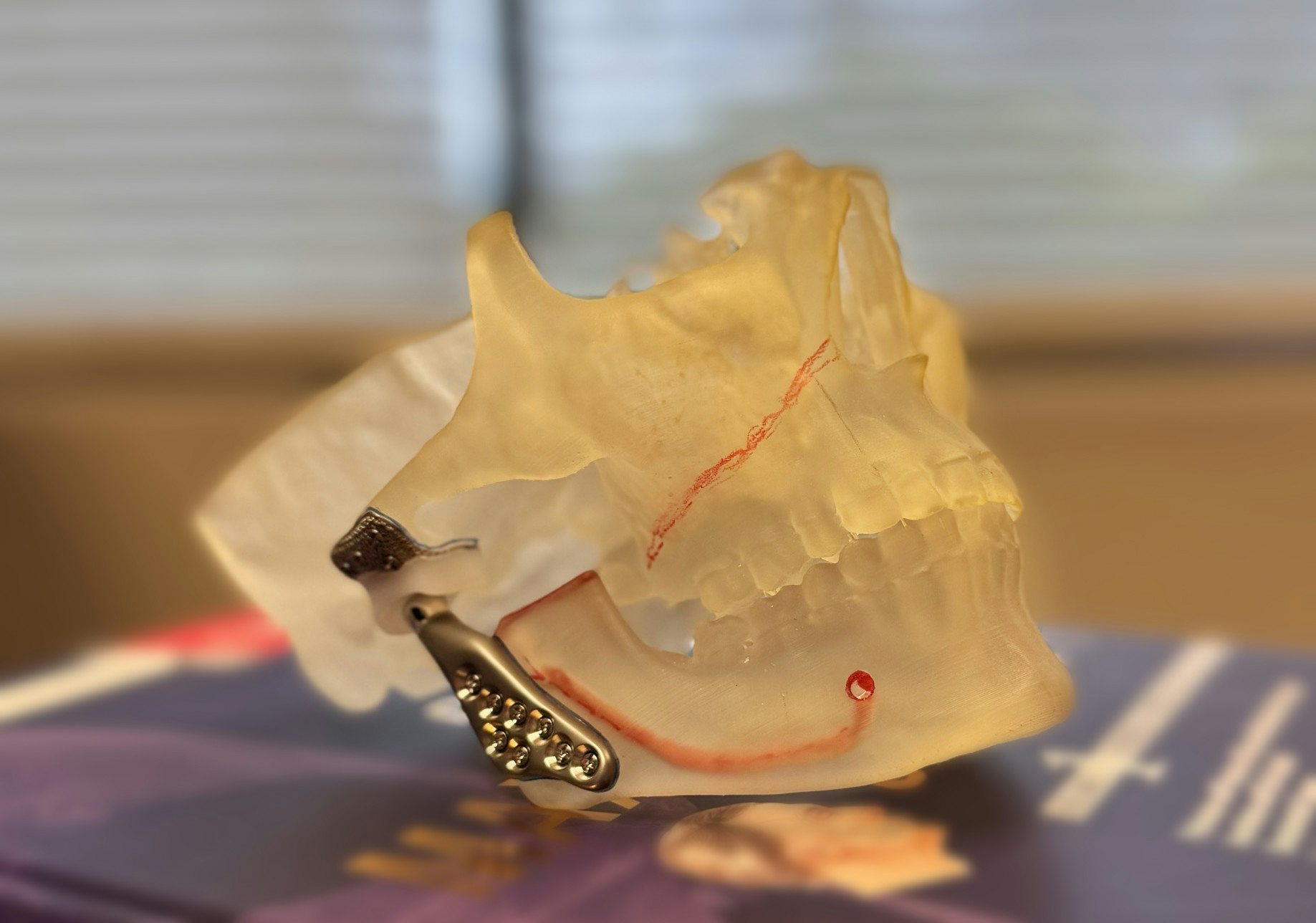
If you experience jaw pain, difficulty chewing or speaking, or feel that your bite or facial balance is off, you may be wondering whether jaw surgery is an option. Understanding the facts behind corrective jaw (Orthognathic) surgery can help clarify when surgery is typically recommended.
Here you’ll learn what orthognathic jaw surgery is and how to know if you may need it, helping you decide when a professional evaluation may be the next step.
What Is Orthognathic Surgery?
Orthognathic surgery addresses jaw alignment problems by repositioning the upper or lower jaw, or both, when their position interferes with their normal function. These alignment issues involve the jaw bones themselves, rather than the teeth alone, which is why orthodontic treatment may not be sufficient in more severe cases.
Depending on the underlying issue, corrective jaw surgery may focus on the upper jaw, the lower jaw, or both. Common categories include:
Single Tooth Replacement
When the upper jaw is positioned too far forward, too far back, or vertically misaligned, it can contribute to problems such as overbite, crossbite, open bite, or midface imbalance. In these cases, surgery may be recommended to reposition the upper jaw so it fits more naturally with the lower jaw.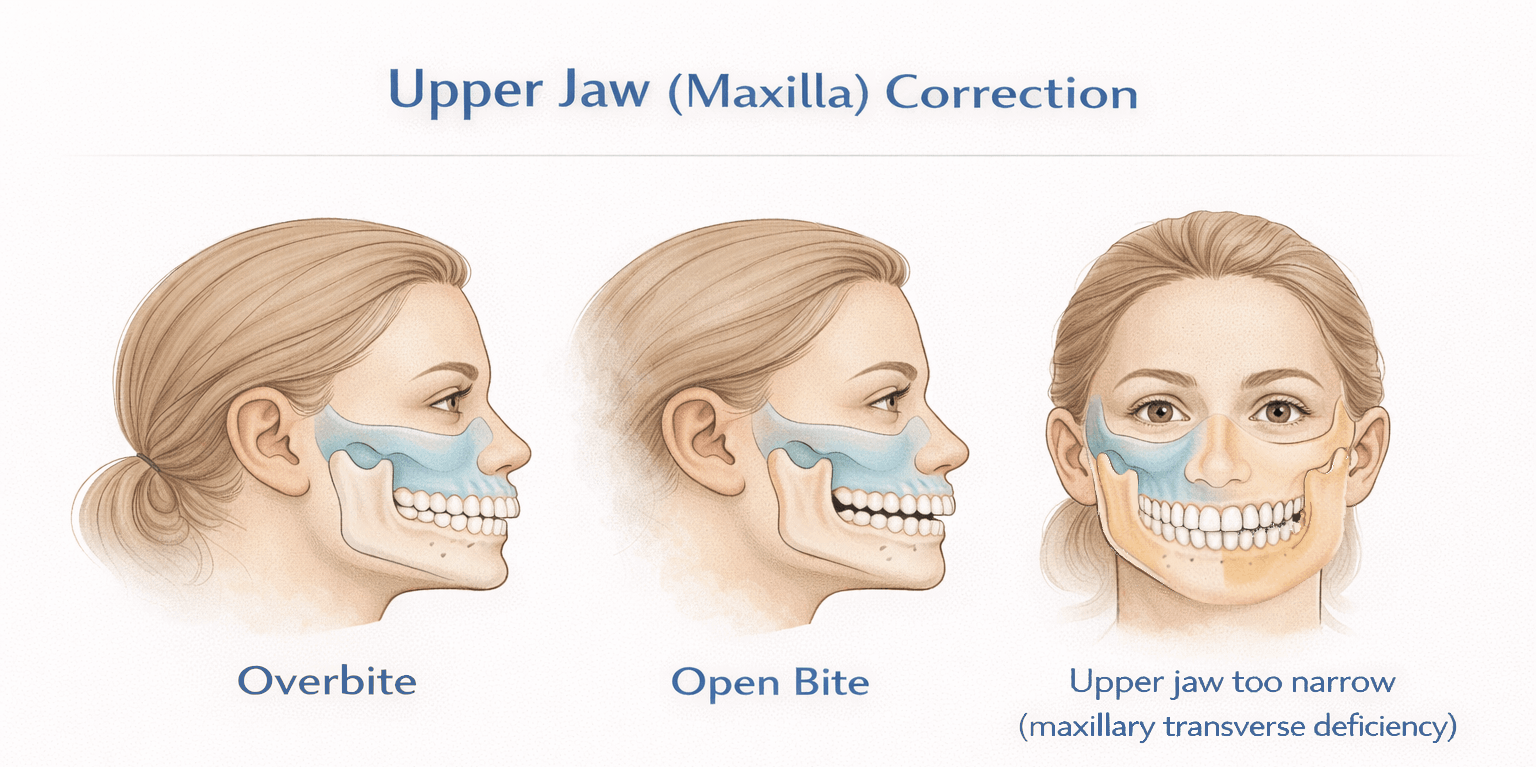
Lower Jaw (Mandibular) Correction
When the lower jaw is recessed, protruding, or uneven, it can affect bite alignment, facial balance, and jaw function. Corrective surgery may be used to reposition the lower jaw so it aligns properly with the upper jaw and supports normal chewing, speaking, and breathing.
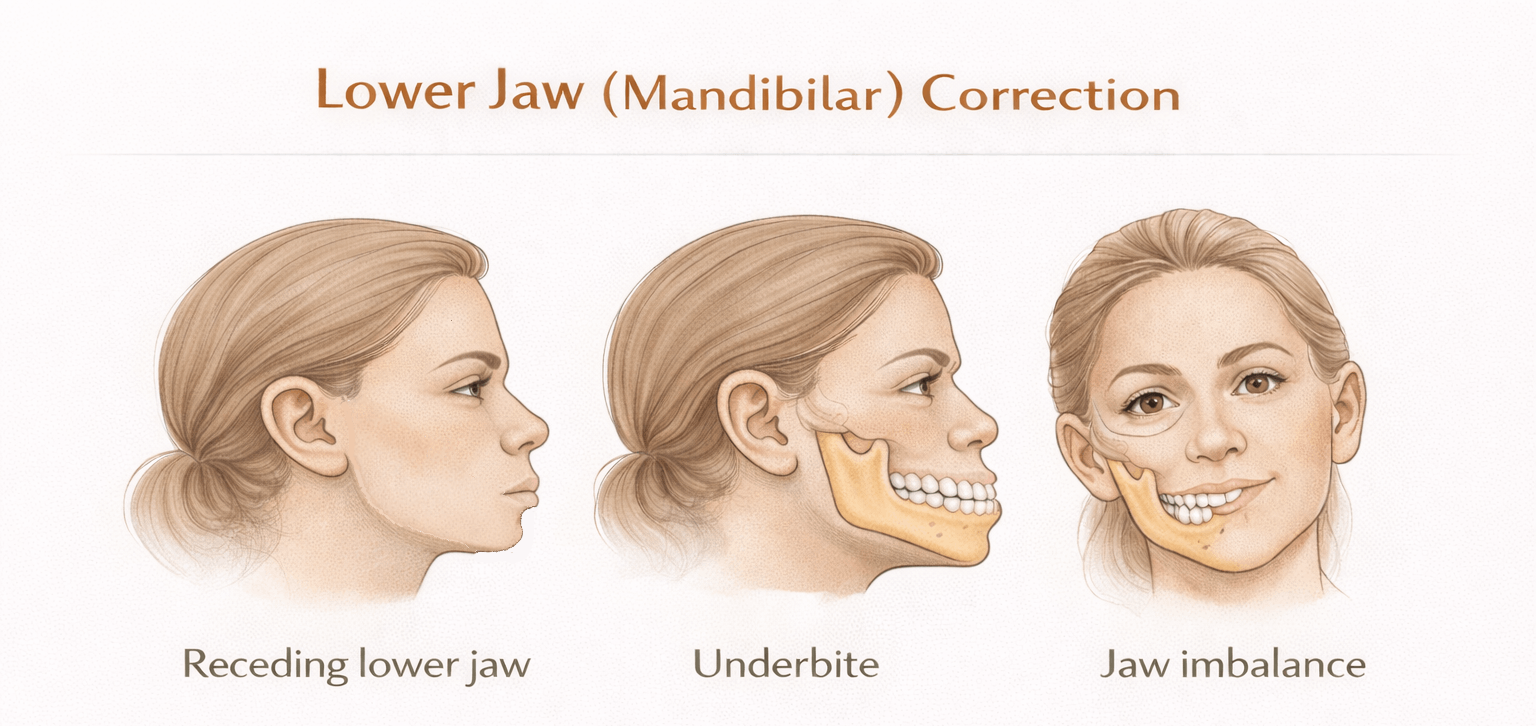
In some situations, both jaws are repositioned together to achieve a balanced alignment and improve their function. A comprehensive evaluation by an oral surgeon is necessary to determine the appropriate approach.
How to Tell If You Might Need Jaw Surgery?
Jaw alignment issues are more common than many people realize, and in some cases, they can affect more than just appearance. When the position of the jaws interferes with normal function, corrective jaw surgery may be recommended as part of treatment.
You may want to consider a professional evaluation if jaw misalignment is contributing to one or more of the following:
- Ongoing difficulty biting, chewing, or swallowing
- Chronic jaw or jaw joint (TMJ) pain, often accompanied by headaches
- Breathing-related issues such as chronic mouth breathing or sleep-disordered breathing
- Facial imbalance or asymmetry that affects function
When these concerns are present, considering your specific bite pattern can help clarify whether jaw position may be a factor.
Signs You May Need Jaw Surgery for an Overbite
An overbite can be caused by your teeth’s or jaw position, or a combination of both. When the upper jaw is positioned too far forward, or the lower jaw is positioned too far back, orthodontic treatment alone may not fully resolve functional issues.
Signs that an overbite may involve jaw position include:
- Difficulty taking a bite or chewing food comfortably
- Excessive or uneven wear on the front teeth
- A noticeable gap between the upper and lower teeth when the mouth is closed (open bite)
- Difficulty bringing the lips together without straining
- Jaw fatigue, strain, or discomfort during eating or speaking
In these cases, jaw surgery may be used to address the underlying skeletal alignment rather than only your tooth position.
Signs You May Need Jaw Surgery for an Underbite
An underbite often occurs when the lower jaw extends forward relative to the upper jaw. In more severe cases, this imbalance can interfere with bite function, jaw movement, and facial balance.
Signs that an underbite may involve jaw structure include:
- Lower teeth sit in front of the upper teeth when biting
- Difficulty biting or chewing certain foods
- A protruding jaw or recessed upper jaw
- Facial imbalance is visible from the front or side
- Jaw discomfort or strain related to bite position
When these signs are caused by jaw structure rather than tooth alignment alone, corrective jaw surgery may be recommended as part of treatment.
When Orthodontics Alone Isn’t Enough
Orthodontic treatment can correct many bite problems caused by tooth position. However, when the underlying issue involves the size, position, or relationship of the jaw bones, orthodontics alone may not fully correct the problem or provide long-term stability.
In these situations, jaw misalignment may continue to affect how the teeth fit together and how the jaw functions. If jaw alignment is affecting how you eat, speak, or breathe, the next step is a professional evaluation with an oral and maxillofacial surgeon, who will assess your jaw structure through a clinical exam and imaging such as facial X-rays or 3D scans to determine whether surgery is recommended or if non-surgical options may be more appropriate.
Is Orthognathic Surgery Worth It?
For individuals with significant jaw misalignment, orthognathic jaw surgery can offer meaningful functional benefits that orthodontic treatment alone may not achieve. When jaw position affects how the teeth come together, correcting the underlying structure can improve how the jaws work as a system.
Potential benefits of corrective jaw surgery may include:
- Improved ability to bite, chew, and swallow comfortably
- Reduced strain on the jaw joints and facial muscles
- Better bite alignment and long-term stability
- Improved airflow and breathing in cases where jaw position contributes to airway restriction
- Improved facial balance when jaw position affects overall harmony
Whether orthognathic surgery is “worth it” depends on how much jaw misalignment is affecting daily function, comfort, and long-term oral health. For some patients, surgery can address problems that have persisted for years despite orthodontic treatment.
“When the jaws are too far apart or out of balance, orthodontics alone can’t correct the problem. Jaw surgery allows us to change the skeletal structure itself so we can improve the bite, the airway, and how everything functions together.” – Dr. John Wessel, DMD, MD
Understanding Your Next Steps
If jaw alignment is causing ongoing functional problems, understanding the facts behind orthognathic jaw surgery can help clarify whether surgery may be an option. A professional evaluation is the best way to determine whether jaw surgery or non-surgical treatment is appropriate for your needs.
If you’d like to take the next step, you can schedule a consultation to discuss your concerns and explore treatment options.